

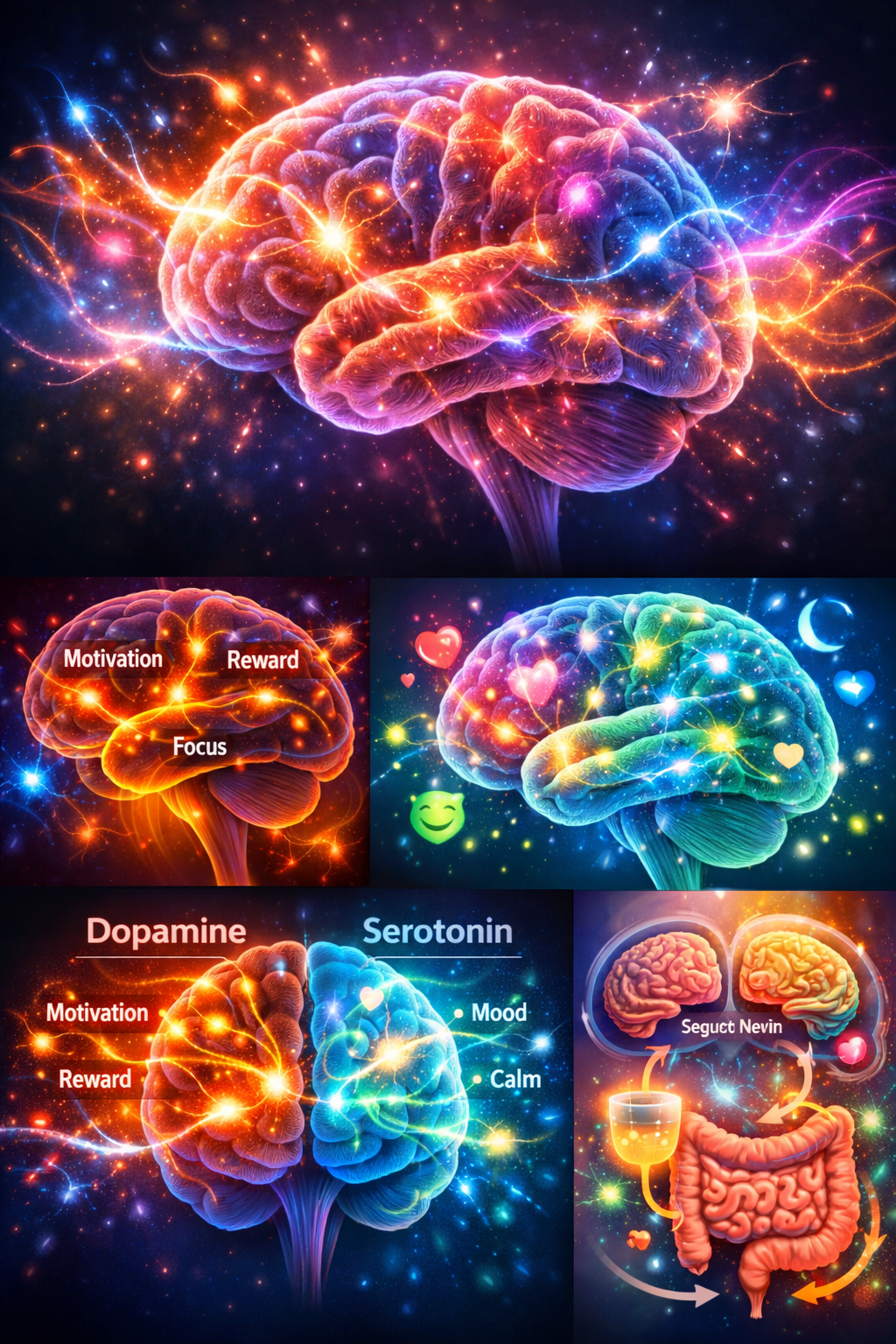

Dopamine and serotonin are two of the most influential neurotransmitters in the human brain, and understanding how dopamine and serotonin affect mood, motivation, focus, and mental health is essential for anyone seeking long-term emotional well-being. These brain chemicals quietly regulate how we experience pleasure, manage stress, stay motivated, and maintain emotional balance throughout daily life.
Many people search for answers about dopamine and serotonin because they feel stuck in cycles of fatigue, anxiety, low motivation, or emotional instability without a clear explanation. When dopamine levels and serotonin levels are balanced, the brain communicates efficiently, allowing motivation and calm to coexist. When these systems are disrupted, even simple tasks can feel overwhelming or emotionally draining.
This comprehensive article explains what dopamine is, what serotonin is, how dopamine and serotonin work together, how they differ, why modern life disrupts these brain chemicals, and how to naturally support dopamine and serotonin production through diet, lifestyle, and evidence-based habits supported by medical science.
Neurotransmitters and Brain Chemistry Explained in Simple Terms
Neurotransmitters are chemical messengers that transmit signals between neurons, allowing the brain and nervous system to function as a coordinated whole. Every thought, emotion, movement, and decision depends on healthy neurotransmitter signaling, making neurotransmitters essential to both mental and physical health.
Dopamine and serotonin receive particular attention because of their strong association with mood regulation, motivation, anxiety, depression, and stress resilience. According to the National Institute of Mental Health, disruptions in neurotransmitter signaling are commonly observed in mood disorders, but these disruptions are often influenced by lifestyle factors rather than permanent defects.
Rather than acting like simple on-off switches, dopamine and serotonin function as regulatory systems that adapt to environment, habits, and stress levels. This adaptability explains why daily routines, nutrition, sleep, and stress management can significantly influence mental health over time.

What Is Dopamine and What Does Dopamine Do in the Brain?
Dopamine is a neurotransmitter that plays a central role in motivation, drive, learning, focus, and reward-based behavior. Dopamine function in the brain determines how strongly we feel motivated to pursue goals, complete tasks, and engage with the world around us.
Importantly, dopamine does not create pleasure itself. Instead, dopamine signals that something is worth pursuing and reinforces behaviors that lead to meaningful outcomes. This is why dopamine is closely tied to habit formation, productivity, and learning. When dopamine signaling is healthy, effort feels worthwhile and progress feels achievable.
Neuroscience research published through the National Center for Biotechnology Information shows that dopamine operates through multiple brain pathways involved in reward, executive function, and motor control. When these pathways are overstimulated or underactive, motivation and focus can suffer.
Low dopamine levels often present as chronic procrastination, mental fatigue, lack of interest, difficulty concentrating, and emotional flatness. Many people describe this state as burnout rather than sadness, which is why dopamine imbalance is frequently discussed in relation to chronic stress and modern work environments.
Dr. Anna Lembke, Professor of Psychiatry at Stanford University, explains:
“Dopamine is not about pleasure; it’s about anticipation and pursuit. When dopamine signaling is disrupted, motivation collapses.”
What Is Serotonin and Why Serotonin Is Essential for Emotional Balance
Serotonin is a neurotransmitter primarily associated with emotional stability, calmness, stress regulation, and overall mood balance. While dopamine motivates action, serotonin helps the brain feel safe, grounded, and emotionally regulated.
Serotonin influences sleep quality, appetite, digestion, impulse control, and emotional resilience. Harvard Medical School notes that serotonin plays a foundational role in how the brain processes stress and emotional signals, making it critical for long-term mental health.
One of the most important scientific facts about serotonin is that approximately 90 percent of serotonin is produced in the gut, not the brain. This explains why gut health, inflammation, and diet have such a strong influence on mood and anxiety.
Low serotonin levels do not always appear as sadness. For many people, low serotonin feels like constant tension, worry, irritability, sleep disturbances, or an inability to relax. This is why serotonin imbalance is often linked to anxiety disorders and chronic stress rather than depression alone.

Dopamine vs Serotonin: Understanding the Key Differences
Dopamine and serotonin serve different but complementary roles in brain chemistry, and understanding the difference between dopamine and serotonin helps explain why motivation and emotional stability do not always improve together.
Dopamine is primarily concerned with movement toward goals, learning from rewards, and sustaining effort. Serotonin, on the other hand, regulates emotional tone, stress tolerance, and feelings of safety. Together, these systems allow humans to pursue meaningful goals without becoming overwhelmed.
A helpful way to understand dopamine vs serotonin is that dopamine asks, “Is this worth pursuing?” while serotonin asks, “Am I safe right now?” When dopamine is high but serotonin is low, people may feel restless, impulsive, or burned out. When both dopamine and serotonin are low, fatigue, disengagement, and low mood are more likely.
Mental health depends on balance between these systems rather than dominance of one neurotransmitter.
How Dopamine and Serotonin Are Produced in the Body
Dopamine and serotonin production depends on specific amino acids, vitamins, minerals, and healthy nervous system signaling. This means that diet, sleep, and stress levels directly influence brain chemistry.
Dopamine is synthesized from the amino acid tyrosine, supported by iron and B-vitamins, while serotonin is synthesized from tryptophan with the help of vitamin B6, magnesium, omega-3 fatty acids, and healthy gut bacteria.
Research published in NCBI shows that chronic stress elevates cortisol, which interferes with serotonin synthesis and reduces dopamine receptor sensitivity. Over time, this makes emotional regulation and motivation more difficult, even when calorie intake is sufficient.
Foods That Increase Dopamine Naturally
Foods that increase dopamine naturally supply the nutrients required for dopamine synthesis and receptor function. Protein-rich foods provide tyrosine, while healthy fats support efficient neurotransmitter signaling.
Consistently consuming nutrient-dense foods helps stabilize dopamine levels rather than creating short-lived spikes. This steady support improves focus, motivation, and mental energy over time rather than producing temporary stimulation.
When dopamine-supporting foods are combined with adequate sleep and movement, the brain becomes more responsive to everyday rewards, reducing reliance on excessive stimulation such as caffeine or screen time.

Foods That Increase Serotonin Naturally
Foods that increase serotonin naturally support gut health, tryptophan availability, and nervous system regulation. Because serotonin is largely produced in the gut, fiber-rich and fermented foods are especially important for emotional balance.
A diverse, whole-food diet supports beneficial gut bacteria that play a role in serotonin signaling. Over time, this improves stress resilience, sleep quality, and emotional stability.
Dietary patterns that reduce inflammation and support digestion often improve mood indirectly by enhancing serotonin availability along the gut–brain axis.
The Gut–Brain Axis and Mental Health
The gut–brain axis is a communication network connecting the digestive system and the brain through the vagus nerve, immune signaling, and neurotransmitter production. Disruptions in gut health can amplify stress signals and suppress serotonin production.
Harvard Health Publishing emphasizes that improving gut health can positively influence mood by supporting serotonin signaling and reducing inflammation. This connection explains why digestive issues and emotional distress often occur together.
Supporting the gut–brain axis through diet, stress management, and sleep creates a foundation for healthier neurotransmitter balance.
Lifestyle Habits That Activate Dopamine and Serotonin
Lifestyle habits strongly influence dopamine and serotonin activity, often more powerfully than supplements alone. Physical exercise increases dopamine sensitivity while also stimulating serotonin release, improving both motivation and emotional balance.
Sunlight exposure supports serotonin production and circadian rhythm regulation, which improves sleep and mood. Learning new skills, completing small goals, and engaging in meaningful social interaction naturally activate dopamine, reinforcing motivation without overstimulation.
Mindfulness, deep breathing, consistent sleep routines, and relaxation practices calm the nervous system, supporting serotonin stability over time.
Stress, Cortisol, and Neurotransmitter Depletion
Chronic stress elevates cortisol, which disrupts dopamine and serotonin signaling. Elevated cortisol suppresses serotonin synthesis and reduces dopamine receptor responsiveness, making motivation harder and emotional regulation more difficult.
This biological response explains why unmanaged stress often leads to burnout, anxiety, and emotional fatigue. Stress management is therefore essential for restoring neurotransmitter balance, not optional.
Reducing chronic stress through lifestyle changes allows dopamine and serotonin systems to recover gradually.
What Low Dopamine and Low Serotonin Feel Like
Low dopamine often feels like lack of motivation, difficulty starting tasks, mental fatigue, and reduced enjoyment. Low serotonin often feels like anxiety, irritability, sleep problems, and emotional tension.
Understanding these differences helps individuals apply the right strategies rather than chasing quick fixes that address the wrong system.

Signs Dopamine and Serotonin Balance Is Improving
As dopamine and serotonin balance improves, people often notice steadier energy, improved focus, better sleep, and reduced emotional reactivity. Motivation becomes more consistent rather than forced, and enjoyment returns to everyday activities.
These changes reflect healthier brain chemistry rather than temporary mood boosts.
Final Thoughts on Dopamine, Serotonin, and Mental Health
Dopamine and serotonin are not shortcuts to happiness, but foundational systems that regulate how humans pursue goals while maintaining emotional stability. Supporting dopamine and serotonin through nutrition, movement, sleep, stress management, and daily habits creates sustainable mental well-being.
Understanding how these neurotransmitters work together gives you control over the conditions that shape your mental health rather than chasing temporary emotional highs.
Reputable Medical and Scientific Sources
1) Dopamine and Motivation / Reward Neuroscience
Article: Dopamine in motivational control: rewarding, aversive, and alerting signals
This peer-reviewed neuroscience article explains how dopamine neurons are involved in reward-based motivation and decision-making, supporting your sections on dopamine’s role in motivation, learning, and reward pathways. PMC
🔗 Link: https://pmc.ncbi.nlm.nih.gov/articles/PMC3032992/
2) Gut–Brain Axis and Mood (Serotonin Connection)
Article: Gut feelings: How food affects your mood — Harvard Health Blog
This medically reviewed article explains the gut-brain connection, serotonin production in the gut, and how gut health influences mood, which supports your discussions about serotonin and diet/serotonin balance. Harvard Health
🔗 Link: https://www.health.harvard.edu/blog/gut-feelings-how-food-affects-your-mood-2018120715548
3) Serotonin’s Role in Mental Disorders
Article: Serotonin and Mental Disorders: A Concise Review — NCBI (2014)
This peer-reviewed review article clearly links serotonin dysfunction to mood disorders, supporting your claims about emotional regulation, anxiety, and serotonin imbalance in mental health. PMC
🔗 Link: https://www.ncbi.nlm.nih.gov/pmc/articles/PMC4293164/
