


Written by Matthew Paul Opperman
Author of Healthy Finds Blog — focused on evidence-based brain health, nutrition, and lifestyle strategies for long-term mental well-being.
Reviewed against peer-reviewed neuroscience and medical research from Harvard Medical School and the National Center for Biotechnology Information (NCBI).
Many people believe motivation, emotional balance, and mental clarity are personality traits — something you either have or you don’t. In reality, these experiences are biological states shaped daily by how the brain’s chemical systems respond to stress, habits, environment, and recovery.
When motivation feels effortless and calm feels stable, the brain’s internal chemistry is working in harmony. When motivation disappears, anxiety rises, or emotional numbness sets in, it is often not a failure of willpower, discipline, or character. It is a signal that the brain’s regulatory systems are under strain.
At the center of this process are two powerful neurotransmitters: dopamine and serotonin. These chemicals quietly shape how effort feels, how reward is perceived, how safe or overwhelmed the nervous system becomes, and how resilient you feel when life applies pressure.
This comprehensive guide explains how dopamine and serotonin work, why modern life disrupts them, and how to restore balance naturally using science-backed strategies — without extremes, hacks, or misinformation.
This article is for educational purposes only and reflects current scientific understanding of neurotransmitters, lifestyle factors, and mental well-being. It is not intended to replace professional medical advice, diagnosis, or treatment.
Who This Article Is For
This guide is for people who feel mentally or emotionally “off” but struggle to pinpoint why. You may feel burned out despite resting, anxious without a clear cause, or unmotivated even when you deeply care about your goals. These experiences are often signs of neurochemical overload rather than personal weakness.
It is also for readers who want natural, sustainable mental health support rooted in biology instead of extremes. Rather than chasing dopamine spikes, suppressing emotions, or relying on constant stimulation, this article focuses on restoring balance by working with the brain’s design.
Dopamine and Serotonin: The Brain’s Core Regulatory Systems
Dopamine and serotonin are commonly described as “feel-good chemicals,” but that phrase oversimplifies their function. These neurotransmitters act as regulatory systems, shaping how the brain assigns meaning, effort, safety, and emotional tone to experiences.
Dopamine governs motivation, learning, reward prediction, and effort allocation. It answers the question: Is this worth pursuing?
Serotonin governs emotional stability, stress tolerance, impulse control, and restfulness. It answers the question: Am I safe enough to slow down?
Mental well-being emerges when these two systems operate in balance. Motivation without calm leads to burnout. Calm without motivation leads to disengagement. Health requires both.

Dopamine: The Chemistry of Motivation, Drive, and Learning
Dopamine is widely misunderstood as the brain’s pleasure chemical. Neuroscience research shows dopamine is primarily responsible for motivation, anticipation, and learning, not pleasure itself (NCBI).
Dopamine spikes before reward, not after it. This signal tells the brain that something matters and is worth effort. Over time, dopamine reinforces behaviors that lead to meaningful outcomes, shaping habits, focus, and persistence.
When dopamine signaling is healthy, effort feels proportional. Tasks may still be challenging, but they do not feel overwhelmingly heavy. When dopamine signaling is impaired, motivation becomes difficult to access even when desire remains.
Research shows dopamine is more closely linked to reward prediction and motivation than pleasure, which explains why burnout often feels like emotional numbness rather than sadness (NCBI).
How Modern Life Dysregulates Dopamine
Modern environments place constant strain on dopamine systems. Social media, notifications, multitasking, instant rewards, and chronic stress repeatedly stimulate dopamine pathways without allowing recovery.
Over time, the brain adapts by reducing receptor sensitivity — a process known as dopamine downregulation. As sensitivity decreases, everyday activities feel less rewarding. Motivation fades. Focus becomes fragile. People often respond by seeking more stimulation, which worsens the cycle.
This is why many people feel unmotivated while being constantly entertained. The issue is not lack of dopamine, but loss of responsiveness.
Serotonin: The Chemistry of Safety, Calm, and Emotional Regulation
If dopamine drives action, serotonin allows the nervous system to feel safe enough to rest. Serotonin plays a central role in emotional stability, stress regulation, impulse control, digestion, and sleep.
Harvard Medical School explains that serotonin helps regulate mood, appetite, and sleep, making it foundational for both mental and physical health. Without adequate serotonin signaling, the nervous system remains in a heightened state of alert, even when no threat is present.
One of the most important scientific facts about serotonin is that approximately 90% of it is produced in the gastrointestinal tract, not the brain (Harvard Health). This alone explains why gut health has such a profound impact on mood and anxiety.

What Low Serotonin Actually Feels Like
Low serotonin does not always look like sadness. More often, it presents as chronic worry, irritability, rumination, emotional sensitivity, poor sleep, and difficulty relaxing.
People often describe feeling “on edge” or mentally tense rather than depressed. Because these symptoms are subtle and persistent, they are frequently dismissed as personality traits or stress.
Research shows serotonin dysregulation is strongly associated with anxiety and stress-related disorders rather than depression alone (NCBI).
The Gut–Brain Axis: Why Mood Begins in Digestion
The gut and brain communicate constantly through the vagus nerve, immune signaling, and neurotransmitters — a system known as the gut–brain axis.
When gut health is compromised by inflammation, poor diet, or chronic stress, serotonin production and signaling often decline. This increases emotional reactivity, anxiety, and mood instability.
Harvard Health Publishing emphasizes that improving gut health can directly improve mood by reducing inflammatory signals and supporting serotonin activity. Supporting digestion is therefore not just about physical comfort — it is a neurological strategy.
Exercise: One of the Most Powerful Neurotransmitter Regulators
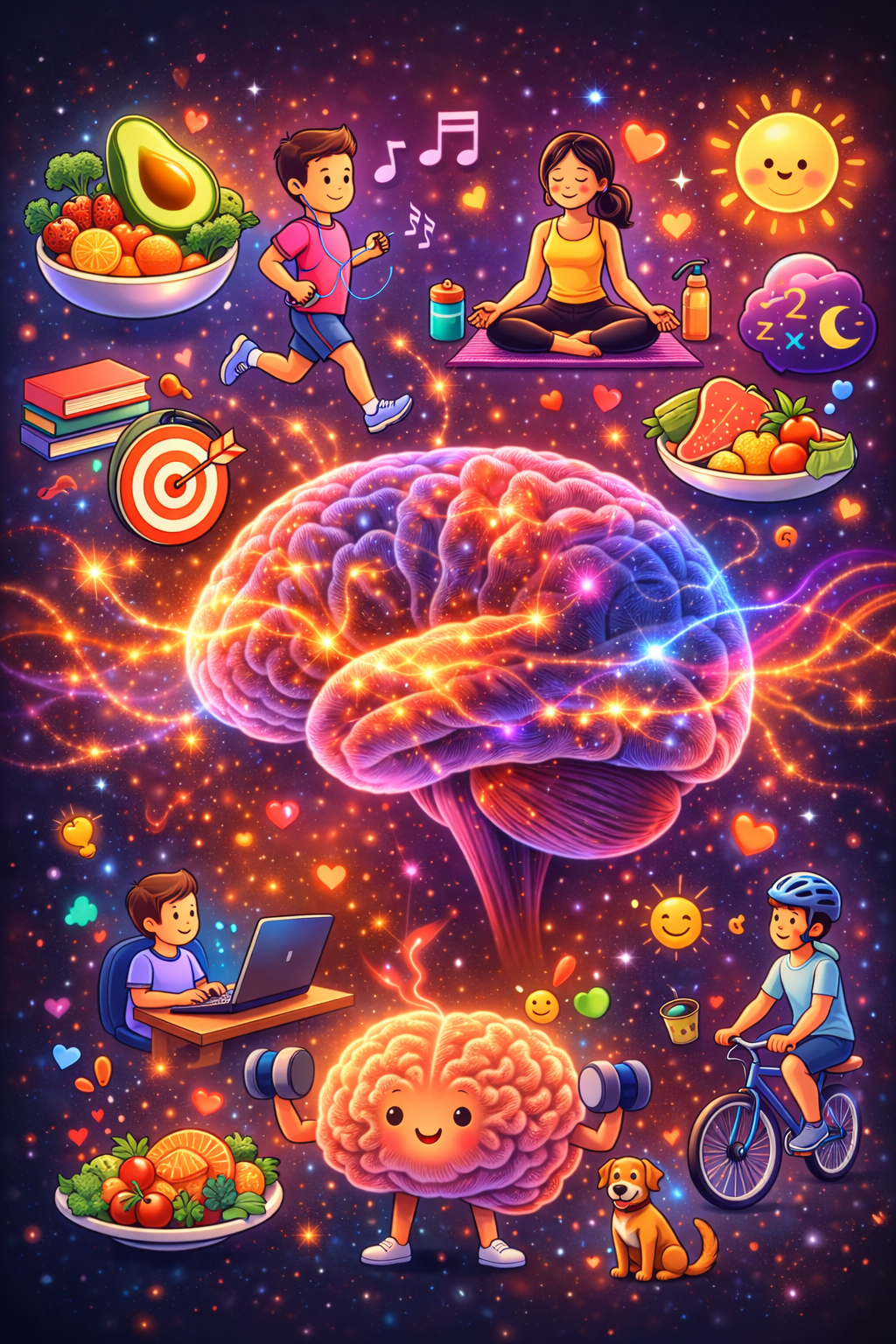
Physical activity is one of the most reliable ways to support dopamine and serotonin naturally. Exercise improves dopamine receptor sensitivity, making motivation easier to access, while also increasing serotonin availability to support emotional stability (NCBI).
Exercise also increases brain-derived neurotrophic factor (BDNF), which supports neuroplasticity and long-term brain resilience. This explains why regular movement is consistently associated with improved mood, focus, and stress tolerance.
Importantly, intensity matters far less than consistency. Even moderate, regular movement has profound effects on brain chemistry over time.
Sunlight, Sleep, and Circadian Rhythm
Sunlight exposure directly influences serotonin production during the day, which later converts to melatonin at night to regulate sleep. When this rhythm is disrupted by indoor lifestyles, irregular schedules, or late-night screens, both dopamine and serotonin signaling suffer.
Poor sleep reduces dopamine receptor sensitivity, making motivation harder the next day, while increasing emotional reactivity due to impaired serotonin regulation. Over time, this creates a feedback loop of fatigue, irritability, and burnout.
Supporting circadian rhythm through morning light exposure and consistent sleep routines is one of the most effective — yet overlooked — mental health strategies.
Music, Creativity, and Healthy Dopamine Activation
Dopamine is activated by novelty, learning, and creativity — not just instant gratification. Music, art, learning new skills, and meaningful hobbies stimulate dopamine pathways in a sustainable way.
Neuroscience research shows music can trigger dopamine release in reward circuits, particularly when it evokes anticipation or emotional engagement. Unlike compulsive stimulation, creative engagement leaves people energized rather than depleted.
Healthy dopamine activation builds motivation gradually and sustainably.

Stress, Cortisol, and Neurotransmitter Depletion
Chronic stress elevates cortisol, which interferes with serotonin synthesis and reduces dopamine receptor responsiveness (NCBI). This makes both motivation and emotional regulation more difficult, even when nutrition and exercise appear adequate.
This biological response explains why burnout often persists despite rest alone. Recovery requires reducing stress and rebuilding neurotransmitter signaling through consistent supportive habits.
Low Dopamine vs Low Serotonin: Why Symptoms Feel Different
Low dopamine typically feels like lack of motivation, difficulty starting tasks, mental fatigue, and emotional flatness. Low serotonin more often feels like anxiety, irritability, rumination, and sleep disruption.
Understanding this distinction allows people to apply the right strategies rather than chasing solutions that worsen imbalance.
Neuroplasticity: How Habits Rewire Brain Chemistry
Dopamine and serotonin systems are highly plastic, meaning repeated habits strengthen or weaken signaling pathways over time (NCBI). Small daily actions compound, reshaping emotional resilience, motivation, and stress tolerance.
This explains why sustainable improvement comes from consistency rather than intensity or extreme interventions.
Common Mistakes That Backfire
Many people unintentionally worsen neurotransmitter imbalance by chasing constant stimulation, ignoring gut health, attempting extreme “dopamine detox” approaches, or relying heavily on supplements while neglecting foundational lifestyle factors.
Balance, recovery, and moderation restore neurotransmitter health far more effectively than deprivation or excess.

What Improvement Feels Like Over Time
As dopamine and serotonin balance improves, people often notice steadier energy, better sleep, reduced emotional reactivity, and renewed enjoyment in daily life. Motivation becomes accessible again, and calm feels natural rather than forced.
These changes are gradual, but deeply stabilizing and long-lasting.
Final Takeaway
Dopamine and serotonin are not switches you flip — they are systems you support. Motivation and calm emerge naturally when the brain is given the conditions it needs to function well.
By supporting gut health, movement, sleep, stress regulation, creativity, and nutrition, you create an internal environment where dopamine and serotonin work together — allowing motivation without burnout and calm without disengagement.

Scientific Sources & References
Harvard Health Publishing (Harvard Medical School)
Gut feelings: How food affects your mood
https://www.health.harvard.edu/blog/gut-feelings-how-food-affects-your-mood-2018120715548
National Center for Biotechnology Information (NCBI)
Dopamine in motivational control: rewarding, aversive, and alerting signals
https://www.ncbi.nlm.nih.gov/pmc/articles/PMC3032992/
National Center for Biotechnology Information (NCBI)
Serotonin and mental disorders: a concise review
https://www.ncbi.nlm.nih.gov/pmc/articles/PMC4293164/